History: Advanced Ogre Framework
Preview of version: 3
- «
- »
Table of contents
Introduction
Once upon a time, a young programmer eager to explore the world of 3D graphics, started wandering around looking for a powerful magician to help him. For a long time he crossed the country from one side to another and back again, until he finally gave up and sat down at side of a old, rugged road. He was sad, really sad...and disappointed that he hasn't been able to reach his wonderful dream.
While he was sitting there in the grass, quarreling with himself, a rather ugly, green Ogre came along the street. He was in a very good temper, whistling a song with a big grin on his face, reaching from one chest to the other. That's when he saw the poor young programmer boy. Sincerely appalled, he asked what in the world made him so sad and the boy told his whole story. But instead of becoming also sad and grieve when hearing this sorrowful story, the Ogre grinned even more and said:
"Boy, this must be your lucky day. You just met the perfect guy! I'm not as nice as the magician you dreamed of helping you, but I am way more powerful. I can render you anything and teach you all the secrets of 3D graphics! Boy, come on! Is no good waiting here when you have a whole new world in front of you!"
That said, the little programmer boy jumped up and flung his arms around the Ogre's neck and almost kissed him, but suddenly realized that...well...kissing an Ogre is not how you should behave...
By the time, the Ogre thought the young boy everything he knew, starting with the first basic tutorials and later even leaving the devil ExampleApplication.h beyond him. But at some point, this wasn't enough anymore. He wanted more:
- A game state system
- a graphical user interface
- different input modes
- scene loading and
- manual material manipulation.
Hopefully he stared up to the Ogres face almost waiting for it telling him, that this is more than he can tell him, but the Ogre only grinned and said:
"I know the perfect secret book for you. I will totally fulfill all your wishes...It's called: The Advanced Ogre Framework!"
And not only has he qualified himself for this kind of advanced knowledge, but also you are ready to be introduced in these magic circles. Just read on...
 If you should encounter any problems while reading, please post in the forum thread for this article.
If this file shouldn't be available anymore (due to a possible restructuring of my website), just send me a PM in the forum.
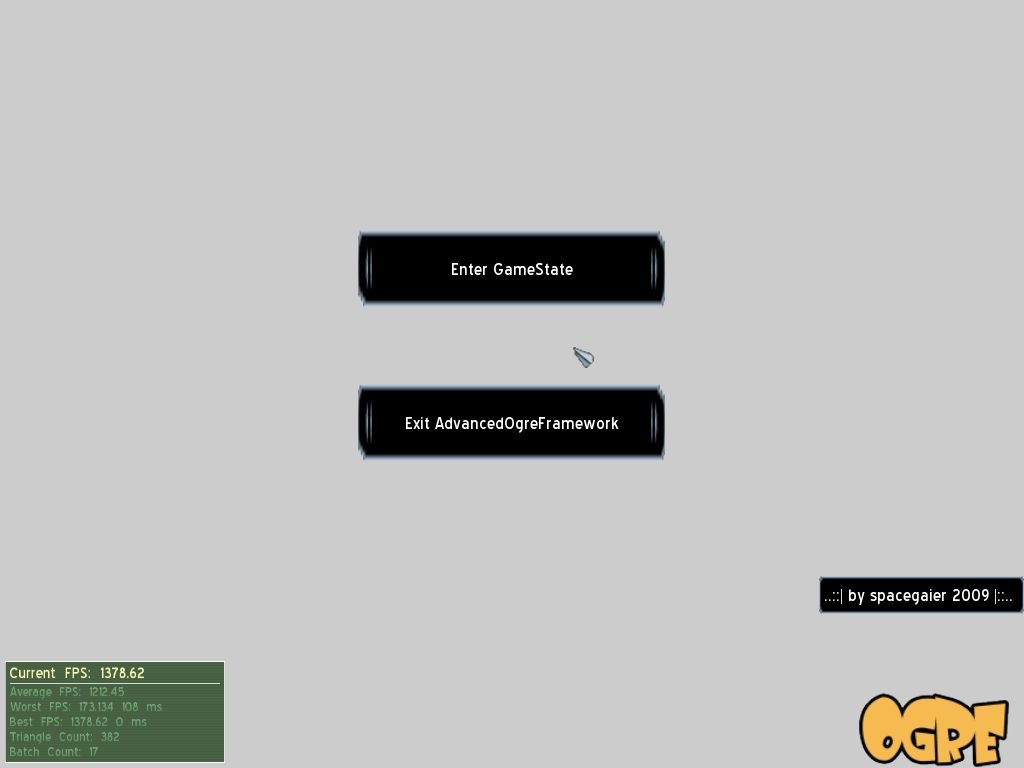
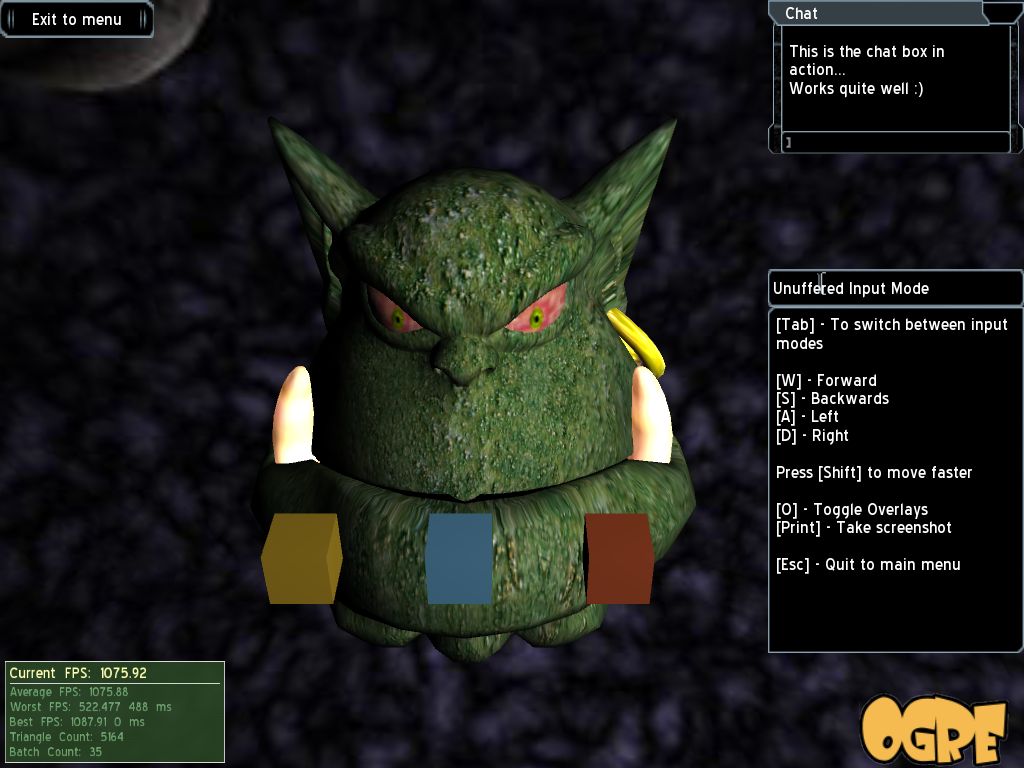
Architecture
Well, the architecture may seem awfully complex, but it isn't that hard to get through it. I will try to explain most of it and with a little bit of patience, everyone should make their way through it.
The whole project consists of 14 header and source files, but: Don't be scared by this huge number! One of these files is the main.cpp, which is as always neither big nor complex and two others won't even be posted here as they are just the two files from the DotSceneLoader. That makes 11 more to cope with.
Another pair is the basic Ogre initialization part, similar to the BasicOgreFramework.hpp / .cpp, with almost nothing new in it and of course another pair called DemoApp.hpp / .cpp being the central organization point with just a few lines of code.
The biggest and most complex part is the remaining 7 files that form together the application state system.
Application state system
For the application state system, I basically used a variation of the approach shown here, however with some minor changes. Generally, the whole system works like this:
For each application state we want to use in our program, we create an own class inheriting AppState.hpp. So each application state has the same basic functions like enter, exit, pause, resume and update as well its own Camera and SceneManager.
The second important part of this system is the AppStateManager.hpp. Its task is to manage all the game states and connect them. To do so, the manager has a stack of active states and always executes the one on top of this stack. At any time, you can then put another state on the stack that is then used until it is popped from the stack. In this case, the manager resumes executing the state that was below the one just removed. As soon as there aren't any active states left, the manager closes the whole application.
main.cpp
All that is done is to create an instance of our DemoApp class and call its startDemo() function. That's it.
//|||||||||||||||||||||||||||||||||||||||||||||||

#include "DemoApp.hpp"

//|||||||||||||||||||||||||||||||||||||||||||||||

#if OGRE_PLATFORM == PLATFORM_WIN32 || OGRE_PLATFORM == OGRE_PLATFORM_WIN32
#define WIN32_LEAN_AND_MEAN
#include "windows.h"

//|||||||||||||||||||||||||||||||||||||||||||||||

INT WINAPI WinMain(HINSTANCE hInst, HINSTANCE, LPSTR strCmdLine, INT)
#else
int main(int argc, char **argv)
#endif
{
    try
      {
        DemoApp demo;
        demo.startDemo();
      }
    catch(std::exception& e)
      {
#if OGRE_PLATFORM == PLATFORM_WIN32 || OGRE_PLATFORM == OGRE_PLATFORM_WIN32
        MessageBoxA(NULL, e.what(), "An exception has occurred!", MB_OK | MB_ICONERROR | MB_TASKMODAL);
#else
        fprintf(stderr, "An exception has occurred: %s\n", e.what());
#endif
      }

    return 0;
}

//|||||||||||||||||||||||||||||||||||||||||||||||
DotSceneLoader
- DotSceneLoader.hpp
- DotSceneLoader.cpp
AdvancedOgreFramework.hpp
- Root
- RenderWindow
- Viewport
- Log
- Timer
- InputManager / Keyboard / Mouse
- GUI Renderer
- GUI System
It also offers functions to handle input, but that is almost not used here, as each application state needs a different input behavior and therefore this is directly modeled in the application states. However, everything common for the whole application can be put here.
//|||||||||||||||||||||||||||||||||||||||||||||||

#ifndef OGRE_FRAMEWORK_HPP
#define OGRE_FRAMEWORK_HPP

//|||||||||||||||||||||||||||||||||||||||||||||||

#include <OgreCamera.h>
#include <OgreEntity.h>
#include <OgreLogManager.h>
#include <OgreOverlay.h>
#include <OgreOverlayElement.h>
#include <OgreOverlayManager.h>
#include <OgreRoot.h>
#include <OgreViewport.h>
#include <OgreSceneManager.h>
#include <OgreRenderWindow.h>
#include <OgreConfigFile.h>

#include <OISEvents.h>
#include <OISInputManager.h>
#include <OISKeyboard.h>
#include <OISMouse.h>

#include <CEGUI/CEGUI.h>
#include <OgreCEGUIRenderer.h>

//|||||||||||||||||||||||||||||||||||||||||||||||

class OgreFramework : public Ogre::Singleton<OgreFramework>, OIS::KeyListener, OIS::MouseListener
{
public:
    OgreFramework();
    ~OgreFramework();

    void initOgre(Ogre::String wndTitle, OIS::KeyListener *pKeyListener = 0, OIS::MouseListener *pMouseListener = 0);
    void updateOgre(double timeSinceLastFrame);
    void updateStats();

    bool keyPressed(const OIS::KeyEvent &keyEventRef);
    bool keyReleased(const OIS::KeyEvent &keyEventRef);

    bool mouseMoved(const OIS::MouseEvent &evt);
    bool mousePressed(const OIS::MouseEvent &evt, OIS::MouseButtonID id);
    bool mouseReleased(const OIS::MouseEvent &evt, OIS::MouseButtonID id);

    Ogre::Root*            m_pRoot;
    Ogre::RenderWindow*        m_pRenderWnd;
    Ogre::Viewport*            m_pViewport;
    Ogre::Log*            m_pLog;
    Ogre::Timer*            m_pTimer;

    OIS::InputManager*        m_pInputMgr;
    OIS::Keyboard*            m_pKeyboard;
    OIS::Mouse*            m_pMouse;

    CEGUI::OgreCEGUIRenderer*    m_pGUIRenderer;
    CEGUI::System*            m_pGUISystem;

private:
    OgreFramework(const OgreFramework&);
    OgreFramework& operator= (const OgreFramework&);

    Ogre::Overlay*            m_pDebugOverlay;
    Ogre::Overlay*            m_pInfoOverlay;
    int                m_iNumScreenShots;
};

//|||||||||||||||||||||||||||||||||||||||||||||||

#endif

//|||||||||||||||||||||||||||||||||||||||||||||||
AdvancedOgreFramework.cpp
- OgreFramework(): Constructor
//|||||||||||||||||||||||||||||||||||||||||||||||

#include "AdvancedOgreFramework.hpp"

//|||||||||||||||||||||||||||||||||||||||||||||||

using namespace Ogre;

//|||||||||||||||||||||||||||||||||||||||||||||||

template<> OgreFramework* Ogre::Singleton<OgreFramework>::ms_Singleton = 0;

//|||||||||||||||||||||||||||||||||||||||||||||||

OgreFramework::OgreFramework()
{
    m_iNumScreenShots    = 0;

    m_pRoot            = 0;
    m_pRenderWnd        = 0;
    m_pViewport        = 0;
    m_pLog            = 0;
    m_pTimer        = 0;

    m_pInputMgr        = 0;
    m_pKeyboard        = 0;
    m_pMouse        = 0;

    m_pDebugOverlay        = 0;
    m_pInfoOverlay        = 0;
}
OgreFramework::~OgreFramework()
{
    if(m_pInputMgr)
    {
        delete m_pKeyboard;
        delete m_pMouse;
        OIS::InputManager::destroyInputSystem(m_pInputMgr);
    }

    delete m_pRoot;
}
- create the log manager
- create the Root
- create the RenderWindow and the Viewport
- power up OIS
- if there was no MouseListener or KeyboardListener passed as a parameter, use the ones from this class, otherwise the passed ones (however you still can use both, by calling the OgreFramework class input functions when you handle input elsewhere)
- load resources
- start Timer
- set up the GUI Renderer and the GUI System and load all needed layouts
- create and show the debug overlay
Note: After running this function you still won't see anything on the screen as there is no Camera and no SceneManager. Those are members of the individual application states!
void OgreFramework::initOgre(Ogre::String wndTitle, OIS::KeyListener *pKeyListener, OIS::MouseListener *pMouseListener)
{
    Ogre::LogManager* logMgr = new Ogre::LogManager();

    m_pLog = Ogre::LogManager::getSingleton().createLog("OgreLogfile.log", true, true, false);
    m_pLog->setDebugOutputEnabled(true);

    m_pRoot = new Ogre::Root();

    m_pRoot->showConfigDialog();
    m_pRenderWnd = m_pRoot->initialise(true, wndTitle);

    m_pViewport = m_pRenderWnd->addViewport(0);
    m_pViewport->setBackgroundColour(ColourValue(0.8, 0.8, 0.8, 1.0));

    m_pViewport->setCamera(0);

    unsigned long hWnd = 0;
       OIS::ParamList paramList;
       m_pRenderWnd->getCustomAttribute("WINDOW", &hWnd);

    paramList.insert(OIS::ParamList::value_type("WINDOW", Ogre::StringConverter::toString(hWnd)));

    m_pInputMgr = OIS::InputManager::createInputSystem(paramList);

       m_pKeyboard = static_cast<OIS::Keyboard*>(m_pInputMgr->createInputObject(OIS::OISKeyboard, true));
       m_pMouse = static_cast<OIS::Mouse*>(m_pInputMgr->createInputObject(OIS::OISMouse, true));

    m_pMouse->getMouseState().height = m_pRenderWnd->getHeight();
    m_pMouse->getMouseState().width     = m_pRenderWnd->getWidth();

    if(pKeyListener == 0)
        m_pKeyboard->setEventCallback(this);
    else
        m_pKeyboard->setEventCallback(pKeyListener);

    if(pMouseListener == 0)
        m_pMouse->setEventCallback(this);
    else
        m_pMouse->setEventCallback(pMouseListener);

    Ogre::String secName, typeName, archName;
    Ogre::ConfigFile cf;
      cf.load("resources.cfg");

    Ogre::ConfigFile::SectionIterator seci = cf.getSectionIterator();
      while (seci.hasMoreElements())
      {
              secName = seci.peekNextKey();
        Ogre::ConfigFile::SettingsMultiMap *settings = seci.getNext();
              Ogre::ConfigFile::SettingsMultiMap::iterator i;
              for (i = settings->begin(); i != settings->end(); ++i)
              {
                        typeName = i->first;
                        archName = i->second;
                        Ogre::ResourceGroupManager::getSingleton().addResourceLocation(archName, typeName, secName);
              }
      }
    Ogre::TextureManager::getSingleton().setDefaultNumMipmaps(5);
    Ogre::ResourceGroupManager::getSingleton().initialiseAllResourceGroups();

    m_pTimer = new Ogre::Timer();
    m_pTimer->reset();

    m_pGUIRenderer = new CEGUI::OgreCEGUIRenderer(m_pRenderWnd, Ogre::RENDER_QUEUE_OVERLAY, false, 3000, 0);
       m_pGUISystem = new CEGUI::System(m_pGUIRenderer);

    CEGUI::SchemeManager::getSingleton().loadScheme((CEGUI::utf8*)"TaharezLookSkin.scheme");
    CEGUI::WindowManager::getSingleton().loadWindowLayout((CEGUI::utf8*)"AdvancedOgreFramework.layout");
    CEGUI::WindowManager::getSingleton().loadWindowLayout((CEGUI::utf8*)"AdvancedOgreFramework_Game.layout");

    m_pDebugOverlay = OverlayManager::getSingleton().getByName("Core/DebugOverlay");
    m_pDebugOverlay->show();

    m_pRenderWnd->setActive(true);
}
- keyReleased(): same as above
- mouseMoved(): same as above
- mousePressed(): same as above
- mouseReleased(): same as above
bool OgreFramework::keyPressed(const OIS::KeyEvent &keyEventRef)
{
    if(m_pKeyboard->isKeyDown(OIS::KC_SYSRQ))
    {
        std::ostringstream ss;
        ss << "screenshot_" << ++m_iNumScreenShots << ".png";
        m_pRenderWnd->writeContentsToFile(ss.str());
        return true;
    }

    if(m_pKeyboard->isKeyDown(OIS::KC_O))
    {
        if(m_pDebugOverlay)
        {
            if(!m_pDebugOverlay->isVisible())
                m_pDebugOverlay->show();
            else
                m_pDebugOverlay->hide();
        }
    }

    return true;
}

//|||||||||||||||||||||||||||||||||||||||||||||||

bool OgreFramework::keyReleased(const OIS::KeyEvent &keyEventRef)
{
    return true;
}

//|||||||||||||||||||||||||||||||||||||||||||||||

bool OgreFramework::mouseMoved(const OIS::MouseEvent &evt)
{
    return true;
}

//|||||||||||||||||||||||||||||||||||||||||||||||

bool OgreFramework::mousePressed(const OIS::MouseEvent &evt, OIS::MouseButtonID id)
{
    return true;
}

//|||||||||||||||||||||||||||||||||||||||||||||||

bool OgreFramework::mouseReleased(const OIS::MouseEvent &evt, OIS::MouseButtonID id)
{
    return true;
}
- updateStats(): Updates the statistics (FPS, triangle count, batch count, ...)
void OgreFramework::updateOgre(double timeSinceLastFrame)
{
    updateStats();
}

//|||||||||||||||||||||||||||||||||||||||||||||||

void OgreFramework::updateStats()
{
    static String currFps = "Current FPS: ";
      static String avgFps = "Average FPS: ";
      static String bestFps = "Best FPS: ";
      static String worstFps = "Worst FPS: ";
      static String tris = "Triangle Count: ";
      static String batches = "Batch Count: ";

      OverlayElement* guiAvg = OverlayManager::getSingleton().getOverlayElement("Core/AverageFps");
      OverlayElement* guiCurr = OverlayManager::getSingleton().getOverlayElement("Core/CurrFps");
      OverlayElement* guiBest = OverlayManager::getSingleton().getOverlayElement("Core/BestFps");
      OverlayElement* guiWorst = OverlayManager::getSingleton().getOverlayElement("Core/WorstFps");

    const RenderTarget::FrameStats& stats = m_pRenderWnd->getStatistics();
      guiAvg->setCaption(avgFps + StringConverter::toString(stats.avgFPS));
      guiCurr->setCaption(currFps + StringConverter::toString(stats.lastFPS));
      guiBest->setCaption(bestFps + StringConverter::toString(stats.bestFPS)
            +" "+StringConverter::toString(stats.bestFrameTime)+" ms");
      guiWorst->setCaption(worstFps + StringConverter::toString(stats.worstFPS)
            +" "+StringConverter::toString(stats.worstFrameTime)+" ms");

      OverlayElement* guiTris = OverlayManager::getSingleton().getOverlayElement("Core/NumTris");
        guiTris->setCaption(tris + StringConverter::toString(stats.triangleCount));

    OverlayElement* guiBatches = OverlayManager::getSingleton().getOverlayElement("Core/NumBatches");
        guiBatches->setCaption(batches + StringConverter::toString(stats.batchCount));

    OverlayElement* guiDbg = OverlayManager::getSingleton().getOverlayElement("Core/DebugText");
    guiDbg->setCaption("");
}
AppState.hpp
- AppStateListener and
- AppState
The first class will later be inherited by the application state manager, but has to be defined here due to design reasons.
- AppstateListener(): Constructor
- ~AppStateListner(): Destructor
- manageGameState(): Function to later add a new state to the manager
- changeAppState(): Exits the current app state and starts the one specified as the parameter
- pushAppState(): Puts a new app state on the active state stack that will then be excecuted
- popGameState(): Removes the top active state from the stack, which results in returning to the one below
- shutdown(): Well, guess what happens here...
The second class is the app state blueprint from which each actual application state will inherit:
- some functions to enter, exit, pause, resume and update the state
- some functions to call other states (orders the manager to start them)
- a pointer to the manager (which is also a AppStateListener)
- own Camera and SceneManager
The last part of this file is a big #define statement. It defines the makro DECLARE_APPSTATE_CLASS via that you can later create the game states.
Note: The backslashes there are very important as they tell the compiler to take those lines as one big one. Otherwise you would get compiler errors...
//|||||||||||||||||||||||||||||||||||||||||||||||

#ifndef APP_STATE_HPP
#define APP_STATE_HPP

//|||||||||||||||||||||||||||||||||||||||||||||||

#include "AdvancedOgreFramework.hpp"

class AppState;

//|||||||||||||||||||||||||||||||||||||||||||||||

class AppStateListener
{
public:
    AppStateListener(void){};

    virtual void manageAppState(Ogre::String stateName, AppState* state) = 0;

    virtual AppState*    findByName(Ogre::String stateName) = 0;
    virtual void        changeAppState(AppState *state) = 0;
    virtual bool        pushAppState(AppState* state) = 0;
    virtual void        popAppState() = 0;
    virtual void        shutdown() = 0;
};

//|||||||||||||||||||||||||||||||||||||||||||||||

class AppState : public OIS::KeyListener, public OIS::MouseListener
{
public:
    static void create(AppStateListener* parent, const Ogre::String name){};

    void destroy(){delete this;}

    virtual void enter(void) = 0;
    virtual void exit(void) = 0;
    virtual bool pause(void){return false;}
    virtual void resume(void){};
    virtual void update(double timeSinceLastFrame) = 0;

protected:
    AppState(void){};
    virtual ~AppState(void){};

    AppState*    findByName(Ogre::String stateName){return m_pParent->findByName(stateName);}
    void        changeAppState(AppState* state){m_pParent->changeAppState(state);}
    bool        pushAppState(AppState* state){return m_pParent->pushAppState(state);}
    void        popAppState(void){m_pParent->popAppState();}
    void        shutdown(void){m_pParent->shutdown();}

    AppStateListener*        m_pParent;

    Ogre::Camera*            m_pCamera;
    Ogre::SceneManager*        m_pSceneMgr;
};

//|||||||||||||||||||||||||||||||||||||||||||||||

#define DECLARE_APPSTATE_CLASS(T)                    static void create(AppStateListener* parent, const Ogre::String name)    {                                        T* myAppState = new T();                        myAppState->m_pParent = parent;                        parent->manageAppState(name, myAppState);            }

//|||||||||||||||||||||||||||||||||||||||||||||||

#endif

//|||||||||||||||||||||||||||||||||||||||||||||||
AppStateManager.hpp
- a std::vector for all existing states (m_States)
- a std::vector for the active states, so the stack of those states currently is use (m_ActiveStateStack)
//|||||||||||||||||||||||||||||||||||||||||||||||

#ifndef APP_STATE_MANAGER_HPP
#define APP_STATE_MANAGER_HPP

//|||||||||||||||||||||||||||||||||||||||||||||||

#include "AppState.hpp"

//|||||||||||||||||||||||||||||||||||||||||||||||

class AppStateManager : public AppStateListener
{
public:
    typedef struct
    {
        Ogre::String name;
        AppState* state;
    } state_info;

    AppStateManager();
    ~AppStateManager();

    void manageAppState(Ogre::String stateName, AppState* state);

    AppState* findByName(Ogre::String stateName);

    void start(AppState* state);
    void changeAppState(AppState* state);
    bool pushAppState(AppState* state);
    void popAppState(void);
    void shutdown(void);

protected:
    void init(AppState *state);

    std::vector<AppState*>        m_ActiveStateStack;
    std::vector<state_info>        m_States;
    bool                m_bShutdown;
};

//|||||||||||||||||||||||||||||||||||||||||||||||

#endif

//|||||||||||||||||||||||||||||||||||||||||||||||
AppStateManager.cpp
- ~AppStateManager(): Destructor, exiting all active application states and emptying the std::vectors
//|||||||||||||||||||||||||||||||||||||||||||||||

#include "AppStateManager.hpp"

#include <OgreWindowEventUtilities.h>

//|||||||||||||||||||||||||||||||||||||||||||||||

AppStateManager::AppStateManager()
{
    m_bShutdown = false;
}

//|||||||||||||||||||||||||||||||||||||||||||||||

AppStateManager::~AppStateManager()
{
    while(!m_ActiveStateStack.empty())
    {
        m_ActiveStateStack.back()->exit();
        m_ActiveStateStack.pop_back();
    }

    while(!m_States.empty())
    {
        m_States.pop_back();
    }
}
void AppStateManager::manageAppState(Ogre::String stateName, AppState* state)
{
    try
    {
        state_info new_state_info;
        new_state_info.name = stateName;
        new_state_info.state = state;
        m_States.push_back(new_state_info);
    }
    catch(std::exception& e)
    {
        delete state;
        throw Ogre::Exception(Ogre::Exception::ERR_INTERNAL_ERROR, "Error while trying to manage a new AppState\n" + Ogre::String(e.what()), "AppStateManager.cpp (39)");
    }
}
AppState* AppStateManager::findByName(Ogre::String stateName)
{
    std::vector<state_info>::iterator itr;

    for(itr=m_States.begin();itr!=m_States.end();itr++)
    {
        if(itr->name==stateName)
            return itr->state;
    }

    return 0;
}
- change to the state specified
- start loop
- capture keyboard and mouse input
- update the current state (the top most of the stack)
- call the OgreFramework class to update and render
void AppStateManager::start(AppState* state)
{
    changeAppState(state);

    double timeSinceLastFrame = 1;
    double startTime = 0;

    while(!m_bShutdown)
    {
        if(OgreFramework::getSingletonPtr()->m_pRenderWnd->isClosed())m_bShutdown = true;

#if OGRE_PLATFORM == OGRE_PLATFORM_WIN32
        Ogre::WindowEventUtilities::messagePump();
#endif
        if(OgreFramework::getSingletonPtr()->m_pRenderWnd->isActive())
        {
            startTime = OgreFramework::getSingletonPtr()->m_pTimer->getMillisecondsCPU();

            OgreFramework::getSingletonPtr()->m_pKeyboard->capture();
            OgreFramework::getSingletonPtr()->m_pMouse->capture();

            m_ActiveStateStack.back()->update(timeSinceLastFrame);

            OgreFramework::getSingletonPtr()->updateOgre(timeSinceLastFrame);
            OgreFramework::getSingletonPtr()->m_pRoot->renderOneFrame();

            timeSinceLastFrame = OgreFramework::getSingletonPtr()->m_pTimer->getMillisecondsCPU() - startTime;
        }
        else
        {
            Sleep(1000);
        }
    }

    OgreFramework::getSingletonPtr()->m_pLog->logMessage("Main loop quit");
    OgreFramework::getSingletonPtr()->m_pLog->logMessage("Shutdown OGRE...");
}
void AppStateManager::changeAppState(AppState* state)
{
    if(!m_ActiveStateStack.empty())
    {
        m_ActiveStateStack.back()->exit();
        m_ActiveStateStack.pop_back();
    }

    m_ActiveStateStack.push_back(state);
    init(state);
    m_ActiveStateStack.back()->enter();
}
bool AppStateManager::pushAppState(AppState* state)
{
    if(!m_ActiveStateStack.empty())
    {
        if(!m_ActiveStateStack.back()->pause())
            return false;
    }

    m_ActiveStateStack.push_back(state);
    init(state);
    m_ActiveStateStack.back()->enter();

    return true;
}
void AppStateManager::popAppState(void)
{
    if(!m_ActiveStateStack.empty())
    {
        m_ActiveStateStack.back()->exit();
        m_ActiveStateStack.pop_back();
    }

    if(!m_ActiveStateStack.empty())
    {
        init(m_ActiveStateStack.back());
        m_ActiveStateStack.back()->resume();
    }
    else
        shutdown();
}
void AppStateManager::shutdown()
{
    m_bShutdown=true;
}
void AppStateManager::init(AppState* state)
{
    OgreFramework::getSingletonPtr()->m_pKeyboard->setEventCallback(state);
    OgreFramework::getSingletonPtr()->m_pMouse->setEventCallback(state);

    OgreFramework::getSingletonPtr()->m_pRenderWnd->resetStatistics();
}
MenuState.hpp
- DECLARE_APPSTATE_CLASS(MenuState): This line calls the macro defined in AppState.hpp, making this class a valid application state
//|||||||||||||||||||||||||||||||||||||||||||||||

#ifndef MENU_STATE_HPP
#define MENU_STATE_HPP

//|||||||||||||||||||||||||||||||||||||||||||||||

#include "AppState.hpp"

//|||||||||||||||||||||||||||||||||||||||||||||||

class MenuState : public AppState
{
public:
    DECLARE_APPSTATE_CLASS(MenuState)

    void enter();
    void createScene();
    void exit();
    bool pause();
    void resume();

    bool keyPressed(const OIS::KeyEvent &keyEventRef);
    bool keyReleased(const OIS::KeyEvent &keyEventRef);

    bool mouseMoved(const OIS::MouseEvent &evt);
    bool mousePressed(const OIS::MouseEvent &evt, OIS::MouseButtonID id);
    bool mouseReleased(const OIS::MouseEvent &evt, OIS::MouseButtonID id);

    bool onExitButton(const CEGUI::EventArgs &args);
    bool onEnterButton(const CEGUI::EventArgs &args);

    void update(double timeSinceLastFrame);

private:
    bool        m_bQuit;
};

//|||||||||||||||||||||||||||||||||||||||||||||||

#endif

//|||||||||||||||||||||||||||||||||||||||||||||||
MenuState.cpp
- create SceneManager
- create a Camera
- set input callbacks
- tell the GUI which SceneManager to use
- set the mouse cursor image
- tell the GUI System which Window to render (AOF_GUI)
- get the buttons from the GUI and set the respective click handlers
- call createScene() to fill the scene with content
//|||||||||||||||||||||||||||||||||||||||||||||||

#include "MenuState.hpp"

//|||||||||||||||||||||||||||||||||||||||||||||||

using namespace Ogre;

//|||||||||||||||||||||||||||||||||||||||||||||||

void MenuState::enter()
{
    OgreFramework::getSingletonPtr()->m_pLog->logMessage("Entering MenuState...");

    m_pSceneMgr = OgreFramework::getSingletonPtr()->m_pRoot->createSceneManager(ST_GENERIC, "MenuSceneMgr");
    m_pSceneMgr->setAmbientLight(Ogre::ColourValue(0.7, 0.7, 0.7));

    m_pCamera = m_pSceneMgr->createCamera("MenuCam");
    m_pCamera->setPosition(Vector3(0, 25, -50));
    m_pCamera->lookAt(Vector3(0, 0, 0));
    m_pCamera->setNearClipDistance(1);

    m_pCamera->setAspectRatio(Real(OgreFramework::getSingletonPtr()->m_pViewport->getActualWidth()) /
                              Real(OgreFramework::getSingletonPtr()->m_pViewport->getActualHeight()));

    OgreFramework::getSingletonPtr()->m_pViewport->setCamera(m_pCamera);

    OgreFramework::getSingletonPtr()->m_pKeyboard->setEventCallback(this);
    OgreFramework::getSingletonPtr()->m_pMouse->setEventCallback(this);

    OgreFramework::getSingletonPtr()->m_pGUIRenderer->setTargetSceneManager(m_pSceneMgr);

    OgreFramework::getSingletonPtr()->m_pGUISystem->setDefaultMouseCursor((CEGUI::utf8*)"TaharezLook", (CEGUI::utf8*)"MouseArrow");
        CEGUI::MouseCursor::getSingleton().setImage("TaharezLook", "MouseArrow");
        const OIS::MouseState state = OgreFramework::getSingletonPtr()->m_pMouse->getMouseState();
    CEGUI::Point mousePos = CEGUI::MouseCursor::getSingleton().getPosition();
    CEGUI::System::getSingleton().injectMouseMove(state.X.abs-mousePos.d_x,state.Y.abs-mousePos.d_y);

    CEGUI::Window* pMainWnd = CEGUI::WindowManager::getSingleton().getWindow("AOF_GUI");
        OgreFramework::getSingletonPtr()->m_pGUISystem->setGUISheet(pMainWnd);

    CEGUI::PushButton* button = (CEGUI::PushButton*)pMainWnd->getChild("ExitButton");
    button->subscribeEvent(CEGUI::PushButton::EventClicked, CEGUI::Event::Subscriber(&MenuState::onExitButton, this));
    button = (CEGUI::PushButton*)pMainWnd->getChild("EnterButton");
    button->subscribeEvent(CEGUI::PushButton::EventClicked, CEGUI::Event::Subscriber(&MenuState::onEnterButton, this));

    m_bQuit = false;

    createScene();
}
bool MenuState::pause()
{
    OgreFramework::getSingletonPtr()->m_pLog->logMessage("Pausing MenuState...");

    OgreFramework::getSingletonPtr()->m_pGUISystem->setGUISheet(0);
    OgreFramework::getSingletonPtr()->m_pGUIRenderer->setTargetSceneManager(0);

    return true;
}
void MenuState::resume()
{
    OgreFramework::getSingletonPtr()->m_pLog->logMessage("Resuming MenuState...");

    OgreFramework::getSingletonPtr()->m_pViewport->setCamera(m_pCamera);
    OgreFramework::getSingletonPtr()->m_pGUIRenderer->setTargetSceneManager(m_pSceneMgr);

    OgreFramework::getSingletonPtr()->m_pGUISystem->setGUISheet(CEGUI::WindowManager::getSingleton().getWindow("AOF_GUI"));

    m_bQuit = false;
}
- exit(): Similar to the pause() function, but also destroys the Camera and the SceneManager
void MenuState::createScene()
{
}

//|||||||||||||||||||||||||||||||||||||||||||||||

void MenuState::exit()
{
    OgreFramework::getSingletonPtr()->m_pLog->logMessage("Leaving MenuState...");

    OgreFramework::getSingletonPtr()->m_pGUISystem->setGUISheet(0);
    OgreFramework::getSingletonPtr()->m_pGUIRenderer->setTargetSceneManager(0);

    m_pSceneMgr->destroyCamera(m_pCamera);
    if(m_pSceneMgr)
        OgreFramework::getSingletonPtr()->m_pRoot->destroySceneManager(m_pSceneMgr);
}
- onExitButton(): Called when the user wants to exit
- onEnterButton(): Called when the user wants to enter the game state
bool MenuState::onExitButton(const CEGUI::EventArgs &args)
{
    m_bQuit = true;
    return true;
}

//|||||||||||||||||||||||||||||||||||||||||||||||

bool MenuState::onEnterButton(const CEGUI::EventArgs &args)
{
    this->pushAppState(findByName("GameState"));
    return true;
}
- keyPressed(): Quits on Escape and forwards the unhandled input to the OgreFramework class
- keyReleased(): Only forwards to the OgreFramework class
- mouseMoved(): Injects the mouse movements to the GUI
- mousePressed(): Injects the mouse clicks to the GUI
- mouseReleased(): Injects the mouse clicks to the GUI
bool MenuState::keyPressed(const OIS::KeyEvent &keyEventRef)
{
    if(OgreFramework::getSingletonPtr()->m_pKeyboard->isKeyDown(OIS::KC_ESCAPE))
    {
        m_bQuit = true;
        return true;
    }

          OgreFramework::getSingletonPtr()->keyPressed(keyEventRef);

    return true;
}

//|||||||||||||||||||||||||||||||||||||||||||||||

bool MenuState::keyReleased(const OIS::KeyEvent &keyEventRef)
{
    OgreFramework::getSingletonPtr()->keyReleased(keyEventRef);

    return true;
}

//|||||||||||||||||||||||||||||||||||||||||||||||

bool MenuState::mouseMoved(const OIS::MouseEvent &evt)
{
    OgreFramework::getSingletonPtr()->m_pGUISystem->injectMouseWheelChange(evt.state.Z.rel);
    OgreFramework::getSingletonPtr()->m_pGUISystem->injectMouseMove(evt.state.X.rel, evt.state.Y.rel);

    return true;
}

//|||||||||||||||||||||||||||||||||||||||||||||||

bool MenuState::mousePressed(const OIS::MouseEvent &evt, OIS::MouseButtonID id)
{
    if(id == OIS::MB_Left)
        OgreFramework::getSingletonPtr()->m_pGUISystem->injectMouseButtonDown(CEGUI::LeftButton);

    return true;
}

//|||||||||||||||||||||||||||||||||||||||||||||||

bool MenuState::mouseReleased(const OIS::MouseEvent &evt, OIS::MouseButtonID id)
{
    if(id == OIS::MB_Left)
        OgreFramework::getSingletonPtr()->m_pGUISystem->injectMouseButtonUp(CEGUI::LeftButton);

    return true;
}
void MenuState::update(double timeSinceLastFrame)
{
    if(m_bQuit == true)
    {
        this->popAppState();
        return;
    }
}
GameState.hpp
//|||||||||||||||||||||||||||||||||||||||||||||||

#ifndef PLAY_STATE_HPP
#define PLAY_STATE_HPP

//|||||||||||||||||||||||||||||||||||||||||||||||

#include "AppState.hpp"

#include "DotSceneLoader.hpp"

#include <OgreSubEntity.h>
#include <OgreMaterialManager.h>

//|||||||||||||||||||||||||||||||||||||||||||||||

enum QueryFlags
{
    OGRE_HEAD_MASK    = 1<<0,
        CUBE_MASK    = 1<<1
};

//|||||||||||||||||||||||||||||||||||||||||||||||

class GameState : public AppState
{
public:
    GameState();

    DECLARE_APPSTATE_CLASS(GameState)

    void enter();
    void createScene();
    void exit();
    bool pause(){return true;}
    void resume(){};

    void moveCamera();
    void getInput();

    bool keyPressed(const OIS::KeyEvent &keyEventRef);
    bool keyReleased(const OIS::KeyEvent &keyEventRef);

    bool mouseMoved(const OIS::MouseEvent &arg);
    bool mousePressed(const OIS::MouseEvent &arg, OIS::MouseButtonID id);
    bool mouseReleased(const OIS::MouseEvent &arg, OIS::MouseButtonID id);

    void onLeftPressed(const OIS::MouseEvent &evt);
    bool onExitButtonGame(const CEGUI::EventArgs &args);

    void update(double timeSinceLastFrame);

    void setBufferedMode();
    void setUnbufferedMode();

private:
    Ogre::SceneNode*            m_pOgreHeadNode;
    Ogre::Entity*                m_pOgreHeadEntity;
    Ogre::MaterialPtr            m_pOgreHeadMat;
    Ogre::MaterialPtr            m_pOgreHeadMatHigh;

    bool                    m_bQuit;

    Ogre::Vector3                m_TranslateVector;
    Ogre::Real                m_MoveSpeed;
    Ogre::Degree                m_RotateSpeed;
    float                    m_MoveScale;
    Ogre::Degree                m_RotScale;

    Ogre::RaySceneQuery*                m_pRSQ;
    Ogre::SceneNode*            m_pCurrentObject;
    Ogre::Entity*                m_pCurrentEntity;
    bool                    m_bLMouseDown, m_bRMouseDown;
    bool                    m_bChatMode;

    CEGUI::Window*                m_pMainWnd;
    CEGUI::Window*                m_pChatWnd;
};

//|||||||||||||||||||||||||||||||||||||||||||||||

#endif

//|||||||||||||||||||||||||||||||||||||||||||||||
GameState.cpp
- enter(): Almost the same as the enter() function of the MenuState.hpp except that:
- a Ray is created with a QueryMask defined in GameState.hpp
- setUnbufferedMode() is called, setting some captions
//|||||||||||||||||||||||||||||||||||||||||||||||

#include "GameState.hpp"

//|||||||||||||||||||||||||||||||||||||||||||||||

using namespace Ogre;

//|||||||||||||||||||||||||||||||||||||||||||||||

GameState::GameState()
{
    m_MoveSpeed        = 0.1;
    m_RotateSpeed        = 0.3;

    m_pCurrentObject    = 0;
}

//|||||||||||||||||||||||||||||||||||||||||||||||

void GameState::enter()
{
    OgreFramework::getSingletonPtr()->m_pLog->logMessage("Entering GameState...");

    m_pSceneMgr = OgreFramework::getSingletonPtr()->m_pRoot->createSceneManager(ST_GENERIC, "GameSceneMgr");
    m_pSceneMgr->setAmbientLight(Ogre::ColourValue(0.7, 0.7, 0.7));

    m_pRSQ = m_pSceneMgr->createRayQuery(Ray());
    m_pRSQ->setQueryMask(OGRE_HEAD_MASK);

    m_pCamera = m_pSceneMgr->createCamera("GameCamera");
    m_pCamera->setPosition(Vector3(5, 60, 60));
    m_pCamera->lookAt(Vector3(5, 20, 0));
    m_pCamera->setNearClipDistance(5);

    m_pCamera->setAspectRatio(Real(OgreFramework::getSingletonPtr()->m_pViewport->getActualWidth()) /
                              Real(OgreFramework::getSingletonPtr()->m_pViewport->getActualHeight()));

    OgreFramework::getSingletonPtr()->m_pViewport->setCamera(m_pCamera);

    OgreFramework::getSingletonPtr()->m_pKeyboard->setEventCallback(this);
    OgreFramework::getSingletonPtr()->m_pMouse->setEventCallback(this);

    OgreFramework::getSingletonPtr()->m_pGUIRenderer->setTargetSceneManager(m_pSceneMgr);

    OgreFramework::getSingletonPtr()->m_pGUISystem->setDefaultMouseCursor((CEGUI::utf8*)"TaharezLook", (CEGUI::utf8*)"MouseArrow");
        CEGUI::MouseCursor::getSingleton().setImage("TaharezLook", "MouseArrow");
        const OIS::MouseState state = OgreFramework::getSingletonPtr()->m_pMouse->getMouseState();
    CEGUI::Point mousePos = CEGUI::MouseCursor::getSingleton().getPosition();
    CEGUI::System::getSingleton().injectMouseMove(state.X.abs-mousePos.d_x,state.Y.abs-mousePos.d_y);

    m_pMainWnd = CEGUI::WindowManager::getSingleton().getWindow("AOF_GUI_GAME");
    m_pChatWnd = CEGUI::WindowManager::getSingleton().getWindow("ChatWnd");

    OgreFramework::getSingletonPtr()->m_pGUISystem->setGUISheet(m_pMainWnd);

    CEGUI::PushButton* pExitButton = (CEGUI::PushButton*)m_pMainWnd->getChild("ExitButton_Game");
    pExitButton->subscribeEvent(CEGUI::PushButton::EventClicked, CEGUI::Event::Subscriber(&GameState::onExitButtonGame, this));

    m_bLMouseDown = m_bRMouseDown = false;
    m_bQuit = false;
    m_bChatMode = false;

    setUnbufferedMode();

    createScene();
}
bool GameState::pause()
{
    OgreFramework::getSingletonPtr()->m_pLog->logMessage("Pausing GameState...");

    OgreFramework::getSingletonPtr()->m_pGUISystem->setGUISheet(0);
    OgreFramework::getSingletonPtr()->m_pGUIRenderer->setTargetSceneManager(0);

    return true;
}
void GameState::resume()
{
    OgreFramework::getSingletonPtr()->m_pLog->logMessage("Resuming GameState...");

    OgreFramework::getSingletonPtr()->m_pViewport->setCamera(m_pCamera);
    OgreFramework::getSingletonPtr()->m_pGUIRenderer->setTargetSceneManager(m_pSceneMgr);

    OgreFramework::getSingletonPtr()->m_pGUISystem->setGUISheet(CEGUI::WindowManager::getSingleton().getWindow("AOF_GUI_GAME"));

    m_bQuit = false;
}
void GameState::exit()
{
    OgreFramework::getSingletonPtr()->m_pLog->logMessage("Leaving GameState...");

    OgreFramework::getSingletonPtr()->m_pGUISystem->setGUISheet(0);
    OgreFramework::getSingletonPtr()->m_pGUIRenderer->setTargetSceneManager(0);

    m_pSceneMgr->destroyCamera(m_pCamera);
    m_pSceneMgr->destroyQuery(m_pRSQ);
    if(m_pSceneMgr)
        OgreFramework::getSingletonPtr()->m_pRoot->destroySceneManager(m_pSceneMgr);
}
- set the SkyBox
- create a Light
- instantiate the DotSceneLoader
- load a DotScene (CubeScene.xml) from the ResourceGroup General
- retrieve the Entities from the DotScene and set the QueryMaskFlag (so that they can't be selected with the mouse)
- put the OgerHead into the scene and also set a QueryMaskFlag, so that it actually can be selected with the mouse
- get the current material from the head, clone it and change the cloned one to red
void GameState::createScene()
{
    m_pSceneMgr->setSkyBox(true, "Examples/SpaceSkyBox");

    m_pSceneMgr->createLight("Light")->setPosition(75,75,75);

    Ogre::DotSceneLoader* pDotSceneLoader = new Ogre::DotSceneLoader();
    pDotSceneLoader->parseDotScene("CubeScene.xml", "General", m_pSceneMgr, m_pSceneMgr->getRootSceneNode());

    m_pSceneMgr->getEntity("Cube01")->setQueryFlags(CUBE_MASK);
    m_pSceneMgr->getEntity("Cube02")->setQueryFlags(CUBE_MASK);
    m_pSceneMgr->getEntity("Cube03")->setQueryFlags(CUBE_MASK);

    m_pOgreHeadEntity = m_pSceneMgr->createEntity("Cube", "ogrehead.mesh");
    m_pOgreHeadEntity->setQueryFlags(OGRE_HEAD_MASK);
    m_pOgreHeadNode = m_pSceneMgr->getRootSceneNode()->createChildSceneNode("CubeNode");
    m_pOgreHeadNode->attachObject(m_pOgreHeadEntity);
    m_pOgreHeadNode->setPosition(Vector3(0, 0, -25));

    m_pOgreHeadMat = m_pOgreHeadEntity->getSubEntity(1)->getMaterial();
    m_pOgreHeadMatHigh = m_pOgreHeadMat->clone("OgreHeadMatHigh");
    m_pOgreHeadMatHigh->getTechnique(0)->getPass(0)->setAmbient(1, 0, 0);
    m_pOgreHeadMatHigh->getTechnique(0)->getPass(0)->setDiffuse(1, 0, 0, 0);
}
- if we are in chat mode (can be toggled via Tab) then all the key hits have to be injected as they should be processed by the GUI
- check for Escape, Tab to switch input modes and Return / Enter when we are in chat mode in order to send the typed in text to the message box
- if we a) are not in the chat mode or b) we are in chat mode, but O was not pressed, we can pass the unhandled input to the OgreFramework class (without this check, e.g. typing in an O in chat mode would also be passed to the OgreFramework resulting in also toggling the Overlays for each typed O)
- keyReleased(): Just passes the input on to the OgreFramework class
bool GameState::keyPressed(const OIS::KeyEvent &keyEventRef)
{
    if(m_bChatMode == true)
    {
        OgreFramework::getSingletonPtr()->m_pGUISystem->injectKeyDown(keyEventRef.key);
        OgreFramework::getSingletonPtr()->m_pGUISystem->injectChar(keyEventRef.text);
    }

    if(OgreFramework::getSingletonPtr()->m_pKeyboard->isKeyDown(OIS::KC_ESCAPE))
    {
        m_bQuit = true;
        return true;
    }

    if(OgreFramework::getSingletonPtr()->m_pKeyboard->isKeyDown(OIS::KC_TAB))
    {
        m_bChatMode = !m_bChatMode;

        if(m_bChatMode)
            setBufferedMode();
        else
            setUnbufferedMode();

        return true;
    }

    if(m_bChatMode && OgreFramework::getSingletonPtr()->m_pKeyboard->isKeyDown(OIS::KC_RETURN) ||
        OgreFramework::getSingletonPtr()->m_pKeyboard->isKeyDown(OIS::KC_NUMPADENTER))
    {
        CEGUI::Editbox* pChatInputBox = (CEGUI::Editbox*)m_pChatWnd->getChild("ChatInputBox");
        CEGUI::MultiLineEditbox *pChatContentBox = (CEGUI::MultiLineEditbox*)m_pChatWnd->getChild("ChatContentBox");
        pChatContentBox->setText(pChatContentBox->getText() + pChatInputBox->getText() + "\n");
        pChatInputBox->setText("");
        pChatContentBox->setCaratIndex(pChatContentBox->getText().size());
        pChatContentBox->ensureCaratIsVisible();
    }

    if(!m_bChatMode || (m_bChatMode && !OgreFramework::getSingletonPtr()->m_pKeyboard->isKeyDown(OIS::KC_O)))
        OgreFramework::getSingletonPtr()->keyPressed(keyEventRef);

    return true;
}

//|||||||||||||||||||||||||||||||||||||||||||||||

bool GameState::keyReleased(const OIS::KeyEvent &keyEventRef)
{
    OgreFramework::getSingletonPtr()->keyReleased(keyEventRef);

    return true;
}
- inject the movement to the GUI
- if the right mouse button is pressed, manipulate the camera
bool GameState::mouseMoved(const OIS::MouseEvent &evt)
{
    OgreFramework::getSingletonPtr()->m_pGUISystem->injectMouseWheelChange(evt.state.Z.rel);
    OgreFramework::getSingletonPtr()->m_pGUISystem->injectMouseMove(evt.state.X.rel, evt.state.Y.rel);

    if(m_bRMouseDown)
    {
        m_pCamera->yaw(Degree(evt.state.X.rel * -0.1));
        m_pCamera->pitch(Degree(evt.state.Y.rel * -0.1));
    }

    return true;
}
- mouseReleased(): The same as above, but for the key release
bool GameState::mousePressed(const OIS::MouseEvent &evt, OIS::MouseButtonID id)
{
    if(id == OIS::MB_Left)
    {
        onLeftPressed(evt);
        m_bLMouseDown = true;

    OgreFramework::getSingletonPtr()->m_pGUISystem->injectMouseButtonDown(CEGUI::LeftButton);
    }
    else if(id == OIS::MB_Right)
    {
        m_bRMouseDown = true;
    }

    return true;
}

//|||||||||||||||||||||||||||||||||||||||||||||||

bool GameState::mouseReleased(const OIS::MouseEvent &evt, OIS::MouseButtonID id)
{
    if(id == OIS::MB_Left)
    {
        m_bLMouseDown = false;

    OgreFramework::getSingletonPtr()->m_pGUISystem->injectMouseButtonUp(CEGUI::LeftButton);
    }
    else if(id == OIS::MB_Right)
    {
        m_bRMouseDown = false;
    }

    return true;
}
- if there is a selected object (which would be stored in m_pCurrentObject) hide its bounding box now and set another material for the Ogre head (the Ogre head is the only selectable object in our scene due to the QueryMask)
- get the position of our mouse cursor
- create a Ray from the camera to this position and check for hits
- iterate over all hits
- if we hit a movable object, show its bounding box and store it into m_pCurrentObject as well as applying a different material to it
void GameState::onLeftPressed(const OIS::MouseEvent &evt)
{
    if(m_pCurrentObject)
    {
        m_pCurrentObject->showBoundingBox(false);
        m_pCurrentEntity->getSubEntity(1)->setMaterial(m_pOgreHeadMat);
    }

    CEGUI::Point mousePos = CEGUI::MouseCursor::getSingleton().getPosition();
    Ogre::Ray mouseRay = m_pCamera->getCameraToViewportRay(mousePos.d_x/float(evt.state.width), mousePos.d_y/float(evt.state.height));
    m_pRSQ->setRay(mouseRay);
    m_pRSQ->setSortByDistance(true);

    Ogre::RaySceneQueryResult &result = m_pRSQ->execute();
    Ogre::RaySceneQueryResult::iterator itr;

    for(itr = result.begin(); itr != result.end(); itr++)
    {
        if(itr->movable)
        {
            OgreFramework::getSingletonPtr()->m_pLog->logMessage("MovableName: " + itr->movable->getName());
            m_pCurrentObject = m_pSceneMgr->getEntity(itr->movable->getName())->getParentSceneNode();
            OgreFramework::getSingletonPtr()->m_pLog->logMessage("ObjName " + m_pCurrentObject->getName());
            m_pCurrentObject->showBoundingBox(true);
            m_pCurrentEntity = m_pSceneMgr->getEntity(itr->movable->getName());
            m_pCurrentEntity->getSubEntity(1)->setMaterial(m_pOgreHeadMatHigh);
            break;
        }
    }
}
- moveCamera(): Translate the camera by the vector assembled in getInput() (10 times faster if Shift is pressed)
bool GameState::onExitButtonGame(const CEGUI::EventArgs &args)
{
    m_bQuit = true;
    return true;
}

//|||||||||||||||||||||||||||||||||||||||||||||||

void GameState::moveCamera()
{
    if(OgreFramework::getSingletonPtr()->m_pKeyboard->isKeyDown(OIS::KC_LSHIFT))
        m_pCamera->moveRelative(m_TranslateVector);
    m_pCamera->moveRelative(m_TranslateVector / 10);
}
void GameState::getInput()
{
    if(m_bChatMode == false)
    {
        if(OgreFramework::getSingletonPtr()->m_pKeyboard->isKeyDown(OIS::KC_A))
        {
            m_TranslateVector.x = -m_MoveScale;
        }

        if(OgreFramework::getSingletonPtr()->m_pKeyboard->isKeyDown(OIS::KC_D))
        {
            m_TranslateVector.x = m_MoveScale;
        }

        if(OgreFramework::getSingletonPtr()->m_pKeyboard->isKeyDown(OIS::KC_W))
        {
            m_TranslateVector.z = -m_MoveScale;
        }

        if(OgreFramework::getSingletonPtr()->m_pKeyboard->isKeyDown(OIS::KC_S))
        {
            m_TranslateVector.z = m_MoveScale;
        }

        if(OgreFramework::getSingletonPtr()->m_pKeyboard->isKeyDown(OIS::KC_LEFT))
        {
            m_pCamera->yaw(m_RotScale);
        }

        if(OgreFramework::getSingletonPtr()->m_pKeyboard->isKeyDown(OIS::KC_RIGHT))
        {
            m_pCamera->yaw(-m_RotScale);
        }

        if(OgreFramework::getSingletonPtr()->m_pKeyboard->isKeyDown(OIS::KC_UP))
        {
            m_pCamera->pitch(m_RotScale);
        }

        if(OgreFramework::getSingletonPtr()->m_pKeyboard->isKeyDown(OIS::KC_DOWN))
        {
            m_pCamera->pitch(-m_RotScale);
        }
    }
}
- leave and remove this state from the active state stack if requested
- determine the move scale depending on the time passed since the last frame
- reset the translation vector for the camera
- get the unbuffered input and move the camera
void GameState::update(double timeSinceLastFrame)
{
    if(m_bQuit == true)
    {
        this->popAppState();
        return;
    }

    m_MoveScale = m_MoveSpeed   * timeSinceLastFrame;
    m_RotScale  = m_RotateSpeed * timeSinceLastFrame;

    m_TranslateVector = Vector3::ZERO;

    getInput();
    moveCamera();
}
- setUnbufferedMode(): Alters all needed GUI captions to fit the current input mode
void GameState::setBufferedMode()
{
    CEGUI::Editbox* pModeCaption = (CEGUI::Editbox*)m_pMainWnd->getChild("ModeCaption");
    pModeCaption->setText("Buffered Input Mode");

    CEGUI::Editbox* pChatInputBox = (CEGUI::Editbox*)m_pChatWnd->getChild("ChatInputBox");
    pChatInputBox->setText("");
    pChatInputBox->activate();
    pChatInputBox->captureInput();

    CEGUI::MultiLineEditbox* pControlsPanel = (CEGUI::MultiLineEditbox*)m_pMainWnd->getChild("ControlsPanel");
    pControlsPanel->setText("[Tab] - To switch between input modes\n\nAll keys to write in the chat box.\n\nPress [Enter] or [Return] to send message.\n\n[Print] - Take screenshot\n\n[Esc] - Quit to main menu");
}

//|||||||||||||||||||||||||||||||||||||||||||||||

void GameState::setUnbufferedMode()
{
    CEGUI::Editbox* pModeCaption = (CEGUI::Editbox*)m_pMainWnd->getChild("ModeCaption");
    pModeCaption->setText("Unuffered Input Mode");

    CEGUI::MultiLineEditbox* pControlsPanel = (CEGUI::MultiLineEditbox*)m_pMainWnd->getChild("ControlsPanel");
    pControlsPanel->setText("[Tab] - To switch between input modes\n\n[W] - Forward\n[S] - Backwards\n[A] - Left\n[D] - Right\n\nPress [Shift] to move faster\n\n[O] - Toggle Overlays\n[Print] - Take screenshot\n\n[Esc] - Quit to main menu");
}
DemoApp.hpp
- the application state manager
- an indicator of whether the application is to be shut down or not
Note: All used game states must be included here!
//|||||||||||||||||||||||||||||||||||||||||||||||

#ifndef OGRE_DEMO_HPP
#define OGRE_DEMO_HPP

//|||||||||||||||||||||||||||||||||||||||||||||||

#include "AdvancedOgreFramework.hpp"
#include "AppStateManager.hpp"

#include "MenuState.hpp"
#include "GameState.hpp"

//|||||||||||||||||||||||||||||||||||||||||||||||

class DemoApp
{
public:
    DemoApp();
    ~DemoApp();

    void startDemo();

private:
    AppStateManager*    m_pAppStateManager;
    bool            m_bShutdown;
};

//|||||||||||||||||||||||||||||||||||||||||||||||

#endif

//|||||||||||||||||||||||||||||||||||||||||||||||
DemoApp.cpp
- DemoApp(): Constructor
- ~DemoApp(): Destructor
- startDemo(): Starts the application:
- fires up the OgreFramework
- initializes Ogre (via the OgreFramework)
- create an AppStateManager instance
- creates the applcaition states (MenuState and GameState)
- orders the AppStateManager to start its main loop function
//|||||||||||||||||||||||||||||||||||||||||||||||

#include "DemoApp.hpp"

//|||||||||||||||||||||||||||||||||||||||||||||||

DemoApp::DemoApp()
{
    m_bShutdown = false;
}

//|||||||||||||||||||||||||||||||||||||||||||||||

DemoApp::~DemoApp()
{
    delete OgreFramework::getSingletonPtr();
    delete m_pAppStateManager;
}

//|||||||||||||||||||||||||||||||||||||||||||||||

void DemoApp::startDemo()
{
    new OgreFramework();
    OgreFramework::getSingletonPtr()->initOgre("AdvancedOgreFramework", 0, 0);

    OgreFramework::getSingletonPtr()->m_pLog->logMessage("Demo initialized!");

    m_pAppStateManager = new AppStateManager();

    MenuState::create(m_pAppStateManager, "MenuState");
    GameState::create(m_pAppStateManager, "GameState");

    m_pAppStateManager->start(m_pAppStateManager->findByName("MenuState"));
}

//|||||||||||||||||||||||||||||||||||||||||||||||
Notes
1. If you want to, you can declare all the Ogre members in the OgreFramework class (Root, Camera, RenderWindow, SceneManager, ...) private and implement getter methods for them. This is mostly a matter of code style and one's preferences. You could also totally remove most of them as they are also singletons (e.g. Ogre::Root, Ogre::Log) and retrieve them via the singleton functions. It's up to you!
2. If Ogre::WindowEventUtilities::messagePump() doesn't work for you, try this instead:
#if OGRE_PLATFORM == OGRE_PLATFORM_WIN32
{
   MSG msg;
   while (PeekMessage(&msg, NULL, 0, 0, PM_REMOVE))
   {
       if (msg.message == WM_QUIT)
          m_bShutdown = true;
       else
       {
          TranslateMessage(&msg);
          DispatchMessage(&msg);
       }
   }
}
#endif
3. On Mac, the Sleep() function is written with a lower-case S at the beginning, so you either have to change this or (if you want both in your code) use this instead:
#if OGRE_PLATFORM == OGRE_PLATFORM_WIN32
   Sleep(1000);
#elif OGRE_PLATFORM == OGRE_PLATFORM_APPLE
   sleep(1000);
#endif
4. In this forum post you will find a list of all needed changes in order to get this running with XCode on Mac.
Conclusion
Fatigued but happy, the little young programmer boy closed the secret book, feeling his head humming due to all the new great knowledge. However, with a satisfied smile on his face, he promised his teacher - the friendly Ogre - to test all these new valuable insights the next day after catching a big load of sleep...